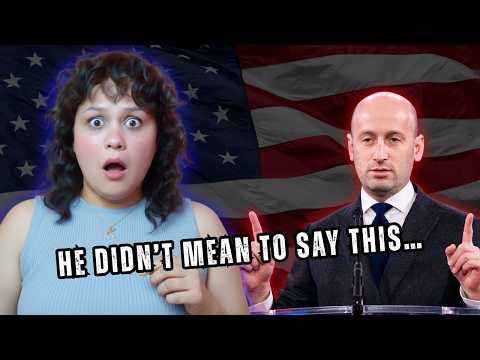
They Keep Blaming Antifa. But Here's What It Actually Means
Antifa is the new boogeyman. But it isn't a group with members or a headquarters. It's an idea, and that's why it scares people in power.
Every time there's a protest, a riot, or just a crowd that disagrees with the government, you hear the same line: "It's Antifa." The White House calls it a terrorist group and says they're "coming after them." But have you ever stopped to ask what Antifa actually is?
Antifa means anti-fascist. That's it.
It's not an organization. There's no membership list, no hierarchy, no office and no paycheck. It's a loose movement of people who believe fascism should never be allowed to rise again. It means resisting authoritarianism, white supremacy and state violence through protest, organizing and sometimes direct action.
And it didn't start in 2020. It's not a Gen Z TikTok thing. Anti-fascism goes back to the 1930s, when people fought the Nazis in the streets of Europe. The belief that silence in the face of fascism is complicity is what it still stands on today.
Why call it the enemy?
Because it's a convenient distraction. Labeling anti-fascism as terrorism makes it easy to justify crackdowns and shifts attention away from far-right extremism, the real threat, and onto activists and protesters instead.
I've seen this firsthand. I've been at protests full of students, teachers, nurses and everyday people standing up for justice, and suddenly we're all painted as operatives. Speak up against the police? Antifa. Wear black and hold a sign? Antifa. Say free Palestine? Antifa.
It's about control
The label is used to scare people away from activism and silence dissent before it happens. But most of the people being called Antifa aren't violent. They're community members fighting for a better world for everyone. If you make anti-fascism sound like a bad word, what you're really doing is normalizing fascism itself.
Antifa isn't the threat. Fascism is. So the next time someone says anti-fascists are the enemy, ask them: since when did opposing fascism become controversial?